
Conference Coverage
Latest Content

Sep 30, 2026 | Feature
CNS Control and Daily Tolerability Guide Treatment Sequencing in HER2-Mutated NSCLC

Researchers Uncover How Aggressive Breast Cancer May Spread to the Brain
Sep 29, 2026

Daraxonrasib Approval Signals a New Era for RAS-Targeted Therapy in Pancreatic Cancer
Sep 29, 2026
Cilta-Cel Shows Long-Term Treatment-Free Remissions in Lenalidomide-Refractory Myeloma
Sep 29, 2026

Rusfertide Approval Expands Options and Improves Burdens in Polycythemia Vera
Sep 29, 2026


Advertisement
OncLive TV
















Shorts
1:15
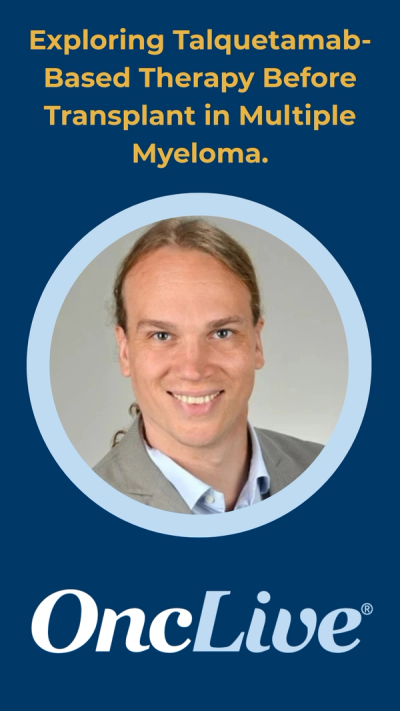
Exploring Talquetamab-Based Therapy Before Transplant in Multiple Myeloma
18 hours ago
by
Leo Rasche, MD
1:25
Examining Iberdomide Plus Daratumumab/Dexamethasone in R/R Multiple Myeloma
18 hours ago
by
Sagar Lonial, MD, FACP, FASCO
2:26
What Will it Take to Use the Word Cure in Myeloma?
4 days ago
by
Riley Kandel(+4 more)
3:06
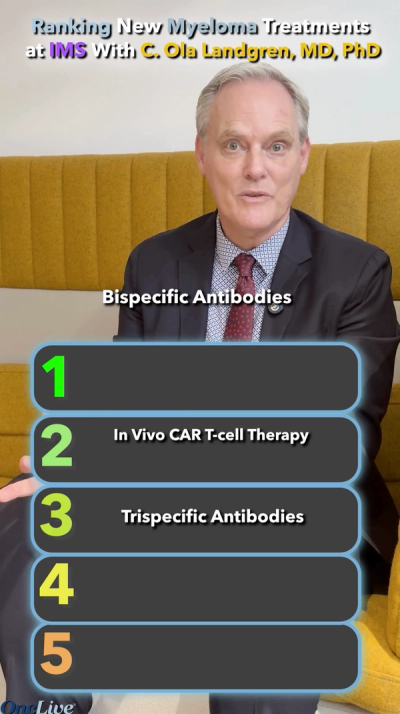
Ranking New Myeloma Treatments With C. Ola Landgren, MD, PhD
5 days ago
by
C. Ola Landgren, MD, PhD
1:12
Explaining How Brigatinib May Work in Schwannomatosis
6 days ago
by
Rebecca Brown, MD, PhD
0:47
Breaking Down the Significance of DISC-3405 in Polycythemia Vera
6 days ago
by
Naseema Gangat, MBBS
0:36
Highlighting the FDA Approval of Camizestrant for Emergent ESR1-Mutated Breast Cancer
7 days ago
by
Erica L. Mayer, MD, MPH

1:44
Weighing the Benefits and Limitations of AI Tools in Breast Oncology
8 days ago
by
Matthew Kurian, MD

0:53
Alexander Drilon, MD, Discusses Human Touch in Cancer Care
13 days ago
by
Alexander Drilon, MD

0:53
Learning Korean at BTG Lung in Seoul!
15 days ago
by
Byoung Chul Cho, MD, PhD













































All News
Advertisement
Advertisement

An NDA seeks FDA approval of savolitinib plus osimertinib for EGFR-mutated NSCLC with MET overexpression or amplification after EGFR TKI therapy.
Jason Hafron, MD, discusses the emotional, clinical, and financial burden of false positive cancer screening results and improved risk stratification.

Raajit K. Rampal, MD, PhD, discusses JAK inhibitor choice in cytopenic myelofibrosis, emerging combinations, and anemia-directed agents.

The sNDA for elinzanetant seeks FDA approval for moderate-to-severe vasomotor symptoms in women receiving endocrine therapy for HR-positive breast cancer.

The NMPA has approved of pirtobrutinib in treatment-naive and previously treated CLL/SLL.

Roswell Park Comprehensive Cancer Center recognized members of its clinical, research and healthcare teams during the second annual Excellence Awards.

The top 5 OncLive TV videos of the week cover insights in breast cancer, PV, myeloma, and CLL.

The first MRD data from the phase 3 EXCALIBER-RRMM trial support iberdomide-based triplet therapy as early as first relapse, with PFS follow-up ongoing.
After nearly 7 years of follow-up, daratumumab added to VRd continued to improve PFS, PFS2, and sustained MRD negativity in transplant-eligible myeloma.
The FDA approved lirafugratinib in FGFR2+ cholangiocarcinoma and belzutifan plus lenvatinib in advanced ccRCC, and more.
Advertisement

Did you catch all of this week's top oncology news? Test your knowledge with OncLive's Weekly News Quiz.

Daiichi Sankyo and Merck withdrew the I-DXd BLA in ES-SCLC after FDA discussions found phase 2 IDeate-Lung01 data insufficient for accelerated approval.

Monthly etentamig significantly improved response and PFS over standard available therapies in the phase 3 CERVINO trial, with low rates of high-grade CRS.

FDA grants priority review to durvalumab plus enfortumab vedotin for cisplatin-ineligible MIBC based on positive phase 3 VOLGA data.

R. Lor Randall, MD, FACS, outlines how AI may affect oncology training, how to properly work alongside AI, and AI-patient conversations.

Results from an early-stage clinical trial found encouraging outcomes in newly diagnosed pancreatic cancer that had spread to distant organs.

Read a refresh of GI cancer FDA news from August 2026, including the approval of a RAS(ON) inhibitor in metastatic pancreatic cancer.

The FDA has approved belzutifan (Welireg) plus lenvatinib (Lenvima) for use in patients with advanced renal cell carcinoma with a clear cell component after PD-1 or PD-L1 inhibition.
R. Lor Randall, MD, FACS, discusses AI in musculoskeletal tumor diagnosis, surgical planning and robotics, and validation of AI tools.

MAPK drugs restore TSHR in aggressive thyroid tumors, helping CAR-T cell therapy see and control solid tumors again.

An FDA advisory committee voted in favor of the benefits of the Galleri MCED test outweighing its risks in patients 50 years of age and older.
Novel approaches to the use of AI in oncology may require discussion and ultimately modification of existing proprietary and regulatory barriers.
Extended follow-up from the phase 1b CAMMA 1 trial showed durable responses across two cevostamab dose levels, supporting selection of a recommended phase 3 regimen.

A MAIC found anito-cel produced response rates similar to those of cilta-cel, with fewer high-grade toxicities, in relapsed/refractory multiple myeloma.
Updated phase 2 LINKER-SMM1 data show single-agent, fixed-duration linvoseltamab produced deep, durable, and MRD-negative responses in high-risk smoldering multiple myeloma.
The FDA has approved lirafugratinib (Lyrfigtu) for the treatment of adult patients with previously treated unresectable, locally advanced or metastatic cholangiocarcinoma harboring an FGFR2 gene fusion or other rearrangement.

An IDMC recommended continuing a phase 2 minimal residual disease study of IMNN-001 without modification following a favorable safety review.

Shailender Bhatia, MD, discusses next steps for adjuvant therapy research in light of the phase 3 ADAM trial data and broader implications for Merkel cell carcinoma.

Clinicians and researchers are set to gather for the UCSF-cosponsored International Invasive Lobular Carcinoma Symposium.
SOT106 Lands Dual FDA Designations for Osteosarcoma and Soft Tissue Sarcoma
Published: | Updated:
SOT106 now holds both orphan drug and fast track designations across soft tissue sarcoma and osteosarcoma ahead of a first-in-human trial.

Shailender Bhatia, MD, discusses ADAM trial design, key efficacy and safety findings, and treatment implications in Merkel cell carcinoma.

Read a refresh of breast cancer FDA news from August 2026, including an sNDA application in PIK3CA-mutant disease and a fast track designation.

Lanreotide injection, a generic formulation referencing lanreotide, was approved by the FDA for GEP-NETs management.
The FDA granted final approval to Lutetium Lu 177 dotatate biosimilar for patients with SSTR-positive GEP-NETs.
The TrueBeam photon therapy system has been added to the Statesir Cancer Center at Atlantic Health CentraState Medical Center.
The addition of the β-catenin pathway inhibitor tegavivint to osimertinib produced deep responses in a phase 1b study in first-line EGFR-mutated NSCLC.

Updated NCCN guidelines now recommend rusfertide as a Category 1 option for both low- and high-risk polycythemia vera.

Orca-T Improves Long-Term OS vs Post-Transplant Cyclophosphamide in Hematologic Malignancies
Published: | Updated:
An observational analysis showed a long-term OS benefit with Orca-T in adult patients undergoing allogeneic transplantation for hematologic malignancies.

FDA has granted fast track designation to LYT-200 plus a hypomethylating agent in relapsed/refractory high-risk myelodysplastic syndromes.

Toon Van Gorp, MD, PhD, discusses key data with TUB-040 in platinum-resistant ovarian cancer and next steps for development.
Japan approved subcutaneous pembrolizumab and berahyaluronidase alfa across all indications for which intravenous pembrolizumab is approved in the country.

New research reveals how cancers carrying mutations in the p53 tumor-suppressor protein can hide those mutations from T cells.

Elise A. Chong, MD, discusses real-world liso-cel efficacy and safety, outpatient use, and future directions in relapsed/refractory mantle cell lymphoma.

Brad S. Kahl, MD, discusses TRIANGLE and EA4151 data reshaping ASCT use in frontline MCL, induction intensity, and high-risk disease strategies.

Mary Ann Anderson, MBBS, FRACP, FRCPA, PhD, discusses recent CLL approvals, BTK and BCL-2 inhibitor safety, and individualizing frontline therapy.
Advertisement
Advertisement
Trending on OncLive
1
Savolitinib Plus Osimertinib NDA Submitted to FDA for MET-Driven, EGFR-Mutated NSCLC After EGFR TKI
2
Daraxonrasib Approval Signals a New Era for RAS-Targeted Therapy in Pancreatic Cancer
3
Cilta-Cel Shows Long-Term Treatment-Free Remissions in Lenalidomide-Refractory Myeloma
4
Researchers Uncover How Aggressive Breast Cancer May Spread to the Brain
5